
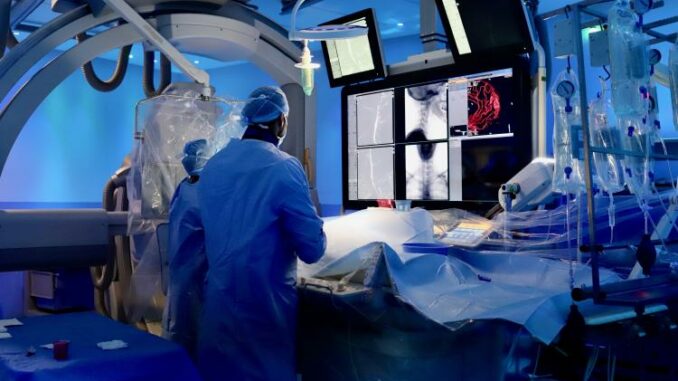
Angola has begun implementing advanced neuroradiology intervention treatments in its public health system, a development expected to generate significant cost savings for the State, by reducing the need for costly overseas procedures.
The initiative is taking place at the Complexo Hospitalar General de Exército Pedro Maria Tonha “Pedalé” in Luanda, where medical teams are performing minimally invasive procedures for complex cerebrovascular conditions such as aneurysms and arteriovenous malformations.
These interventions were previously referred abroad at an average cost exceeding $200,000 per patient, with total expenses — including evacuation, transport and hospital stays — adding up to substantial sums for the public purse.
The project marks the launch of a national neurorradiology intervention programme that aims to keep patients in Angola for high‑complexity care, significantly reducing treatment costs and offering clinical and technical benefits, including shorter hospital stays and faster recovery times.
This initiative is supported by collaboration with Brazilian specialists and forms part of a broader health training programme funded by the World Bank and coordinated by the relevant health implementation unit. It is also expected to strengthen local capacity and position the hospital as a national and regional reference centre for cerebral vascular treatment.
Authorities estimate that the combined savings per patient could be as high as $300,000 reflecting the high cost of such interventions abroad and the potential financial relief this service brings to the Angolan health system.