
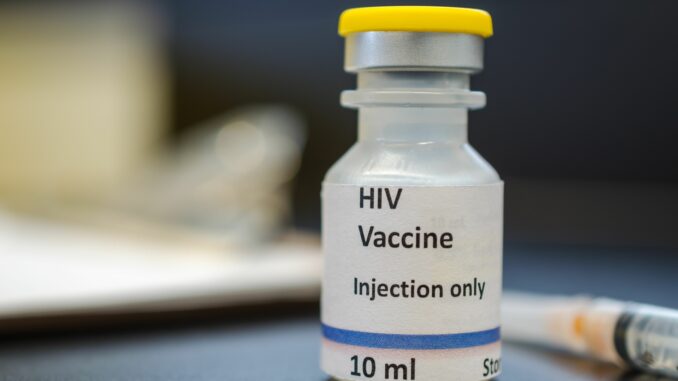
Zimbabwe’s health authorities, on Thursday, began administering the long-acting HIV prevention drug lenacapavir, positioning the country among the first globally to roll out the injectable treatment as it intensifies efforts to reduce new infections.
Despite progress over the past decade, Zimbabwe remains one of the countries with the highest HIV burden in Africa, though new infections have declined significantly due to expanded prevention, testing and treatment programmes.
Health Minister Douglas Mombeshora announced that the programme, funded by the United States and the Global Fund, will initially target more than 46,000 high-risk individuals across 24 sites nationwide. He described the launch as a significant milestone in Zimbabwe’s strategy to end AIDS as a public health threat.
The country received its first batch of lenacapavir earlier this month, with some early adopters already injected. The nationwide rollout will be implemented in phases. Developed by Gilead Sciences, lenacapavir is administered as a subcutaneous injection twice a year.
Health officials say the long-acting formulation addresses adherence challenges linked to daily oral pre-exposure prophylaxis (PrEP) pills.
Zimbabwe has recorded notable progress in combating HIV, achieving the UNAIDS 95-95-95 targets: 95% of people living with HIV know their status, 95% of those diagnosed are on treatment, and 95% of those on treatment have achieved viral suppression. Community leader Melody Dengu from Epworth in Harare confirmed she had received the injection earlier this month and has encouraged others to follow suit.