
The United Nations has warned of a sharp escalation in violence in South Sudan, citing deepening political deadlock among parties to the country’s 2018 Revitalized Peace Agreement.
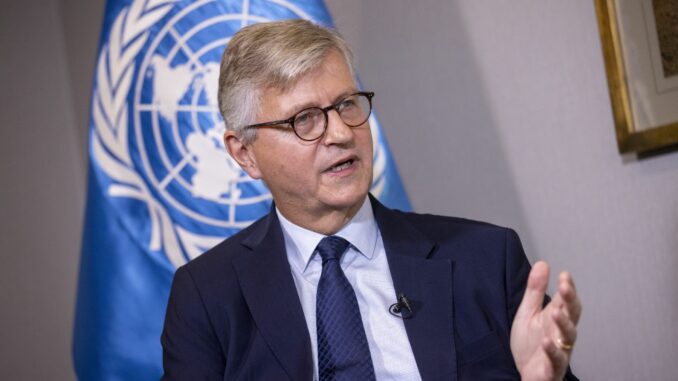
Briefing the UN Security Council on February 10, 2026, UN peacekeeping chief Jean-Pierre Lacroix said stalled implementation of the peace deal had fueled renewed clashes, particularly in Jonglei state.
Fighting between government and opposition forces has intensified in recent weeks, with reports of aerial bombardments, inflammatory rhetoric and mass displacement. According to government figures, more than 280,000 people have been displaced in Jonglei alone.
Lacroix raised concerns over reports that government forces had ordered the temporary relocation of civilians, as well as UN and humanitarian personnel, from parts of Jonglei in late January ahead of a planned military operation. Authorities later denied issuing such directives. He also cautioned that
unilateral efforts to amend the peace agreement, including proposals to delay constitution-making until after elections, risk undermining the accord.
The main opposition group, SPLM/A-IO, has rejected the proposals and is demanding the release of First Vice President Riek Machar before re-engaging in political dialogue. South Sudan remains one of the most dangerous countries for aid workers. Lacroix said 350 attacks on humanitarian personnel and facilities were recorded in 2025, up from 255 in the previous year. Access constraints persist, especially in opposition-held areas, as the country grapples with its worst cholera outbreak, with more than 98,000 cases reported since September 2024.
Violence in Jonglei has forced the closure of nutrition sites and health facilities, affecting thousands of children and pregnant women. Attacks and looting of humanitarian barges in Upper Nile state have further restricted aid operations. Lacroix also warned that cost-cutting measures at the UN Mission in South Sudan (UNMISS) have reduced patrols by up to 70 per cent in some areas and led to the cancellation of dozens of human rights monitoring missions, limiting civilian protection efforts.
Despite these challenges, he said UNMISS continues to play a deterrent role, citing its presence in Akobo, Jonglei, which he said helped prevent possible aerial bombardments amid escalating fighting. He urged South Sudan’s leaders to return to inclusive dialogue and uphold the peace agreement, warning that elections conducted without consensus would lack credibility and international support.